

Educational access
Help schools gain dependable shared environments for science instruction, live learning and technical exploration.
Industry collaboration
Spaceposium Foundation is developing standardized planning and estimating architecture for three levels of the Spaceposium Space-STEM Expo System™. We are inviting qualified audiovisual manufacturers, distributors, systems integrators, education resellers, installers, training organizations and workforce-development organizations to help turn that framework into responsible, repeatable school deployments.
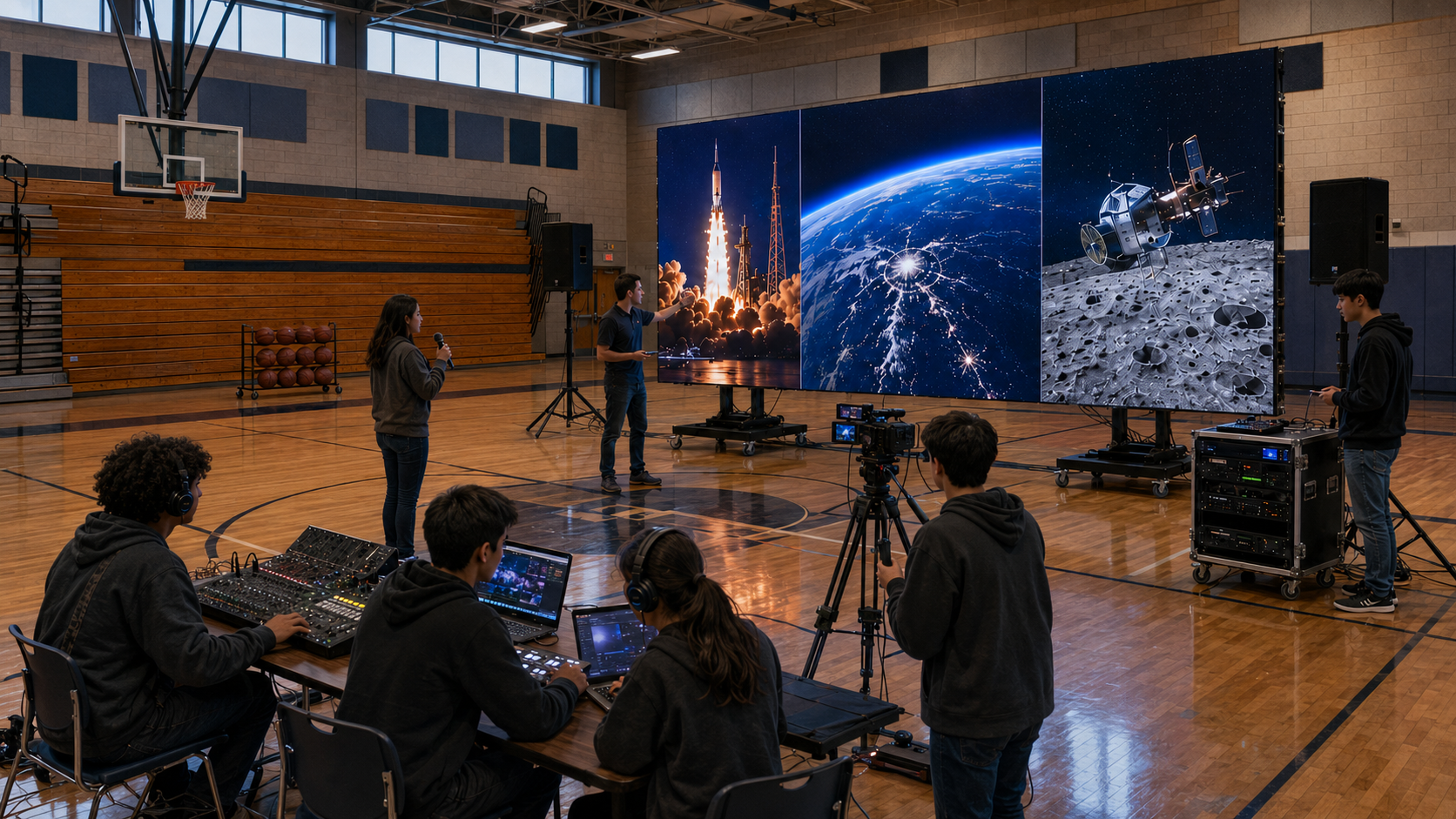
Illustrative concept image
Why industry participation matters
Help schools gain dependable shared environments for science instruction, live learning and technical exploration.
Help establish realistic system categories, labor assumptions and deployment standards that can scale responsibly.
Help turn installed systems into supervised learning environments for audio, video, networking and live-production skills.
Help create documented sponsor-ready project scopes instead of vague equipment campaigns.
Where we need industry input
Who we want to hear from
Organizations interested in educational pricing, system standardization, product-category guidance or responsible in-kind participation.
Organizations capable of helping establish repeatable education-sector sourcing, fulfillment and logistics.
Organizations experienced in designing, installing, commissioning and supporting professional AV systems in educational environments.
Organizations familiar with school procurement, district contracts and institutional purchasing.
Qualified organizations capable of regional deployment, commissioning and support.
Organizations interested in helping students gain exposure to professional AV, broadcast, networking and production skills.
From AV system to learning platform
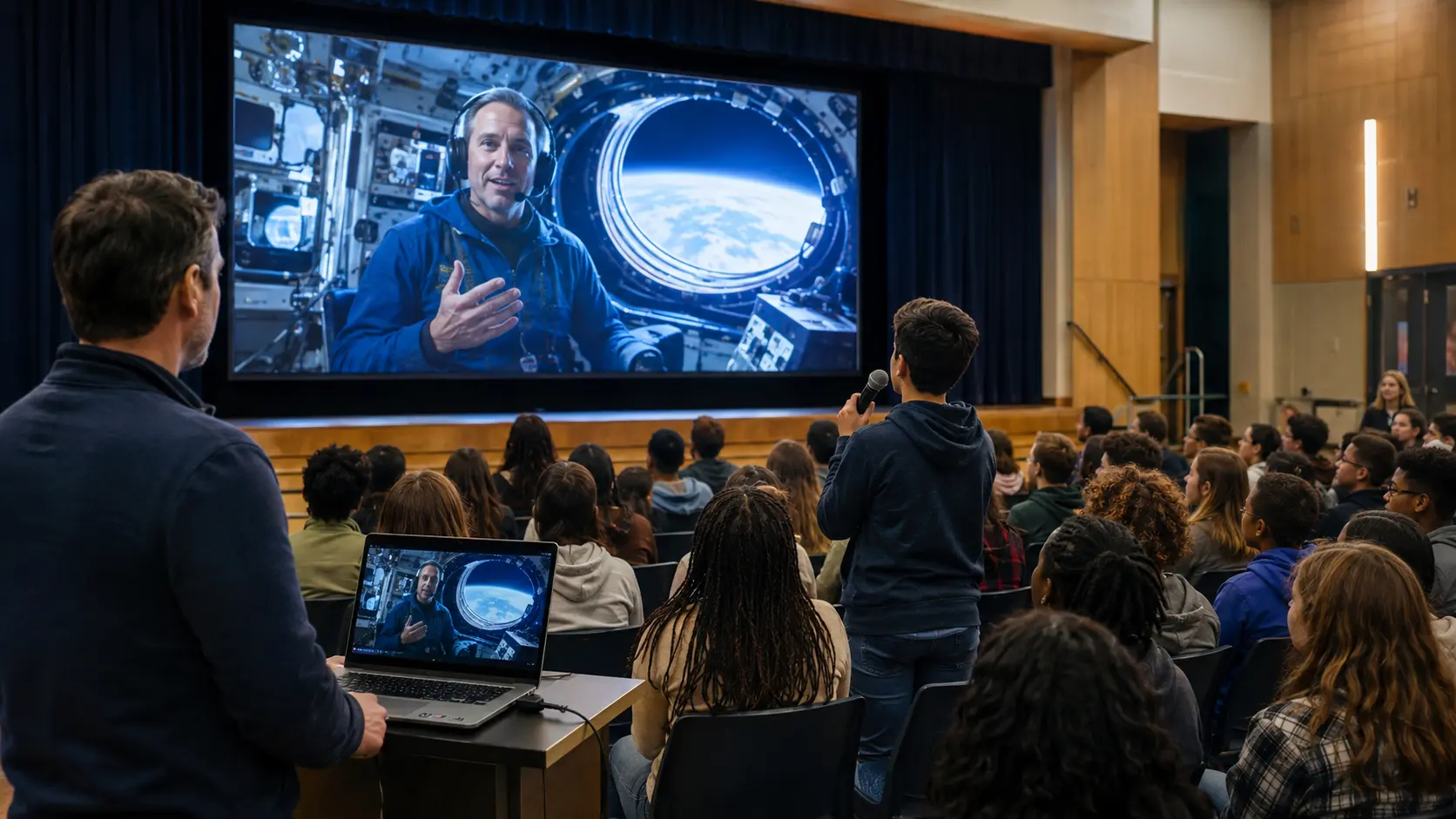
Over time, equipped schools are intended to connect through the Foundation’s Global Space Learning Network™, a framework for shared live programming and scheduled sessions. That network is in development; no network scale, participating school roster or shared programming calendar exists today.
Workforce connection
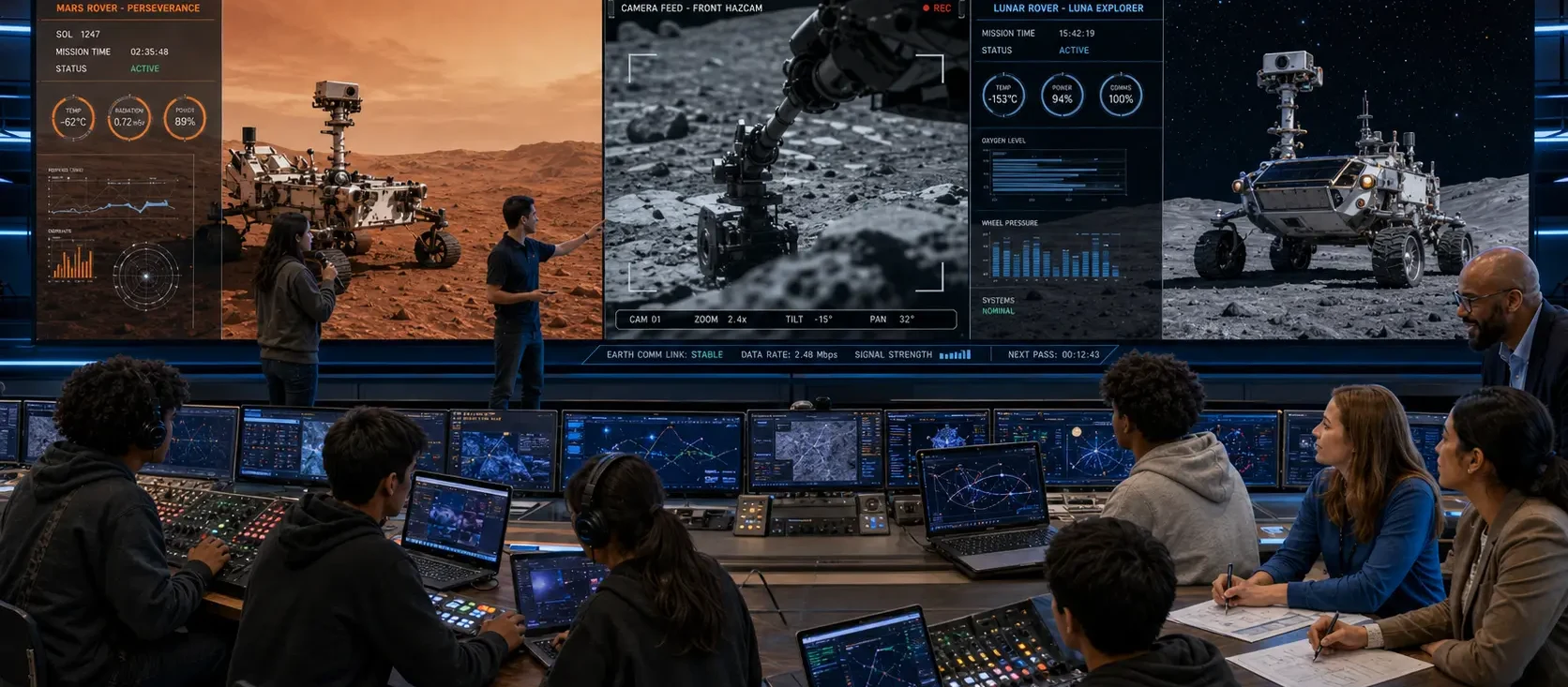
An installed Spaceposium Space-STEM Expo System™ could eventually provide a supervised technical learning environment for practical skills:
What success would look like
Open partner-development invitation
This page describes areas in which the Foundation is seeking qualified industry participation. No partnership, sponsorship, pricing agreement, manufacturer relationship, integrator relationship or trade-association relationship is represented unless it has been independently verified and documented in writing.
Get in touch